AI and data science careers are growing rapidly in 2026 as businesses across industries increasingly depend on automation systems, AI-powered technologies, and data-driven decision-making to improve productivity and business performance. Companies now use artificial intelligence, machine learning, analytics platforms, and predictive systems in areas such as healthcare, finance, e-commerce, cybersecurity, digital marketing, and business operations, creating strong demand for skilled professionals in AI and data science.
Modern employers are also moving toward skill-based hiring where practical implementation ability, analytical thinking, communication skills, and real-world problem-solving matter more than academic qualifications alone. Students interested in AI and data science now need industry-ready technical expertise, portfolio development, and practical learning experience to remain competitive in future-focused workplaces.
At the same time, AI-powered industries continue evolving rapidly with automation workflows, cloud technologies, data analytics, and intelligent productivity systems. Professionals who continuously improve their technical and analytical skills are more likely to access high-growth career opportunities and long-term career scalability in technology-driven industries. In the upcoming sections, we will discuss the top career paths for students interested in AI and data science, the skills companies expect from future-ready professionals, and how learners can prepare for high-growth technology careers in 2026.
Why AI and Data Science Careers Are Growing Rapidly in 2026
AI and data science careers are growing rapidly in 2026 because businesses across industries increasingly depend on automation systems, AI-powered technologies, and data-driven operations to improve productivity, efficiency, and business decision-making. Companies now use artificial intelligence and analytics systems to optimize workflows, understand customer behavior, improve security, and manage large-scale digital operations.
One major reason for this growth is the expansion of AI-powered workplaces where organizations increasingly use:
- Machine learning systems
- Automation workflows
- Predictive analytics tools
- AI-assisted productivity platforms
- Data-driven decision-making systems
These technologies are transforming industries and creating strong demand for AI and data science professionals.
Another important factor is digital transformation across industries such as:
- Information technology
- Healthcare
- Banking and finance
- E-commerce
- Cybersecurity
- Digital marketing
These industries increasingly require professionals who can analyze data, optimize workflows, and support AI-assisted business operations.
Skill-based hiring is also becoming more common because employers now prioritize:
- Practical implementation ability
- Analytical thinking
- Problem-solving skills
- Workplace adaptability
- Continuous learning mindset
instead of depending only on theoretical learning.
Professionals with AI and data science expertise are often highly valued because they can support innovation, productivity optimization, and technology-driven business growth in modern workplaces.
For students exploring future-focused artificial intelligence jobs, understanding evolving AI technologies and data-driven workplace systems can significantly improve employability and long-term career growth in 2026.
Students Have Multiple Career Opportunities in AI and Data Science
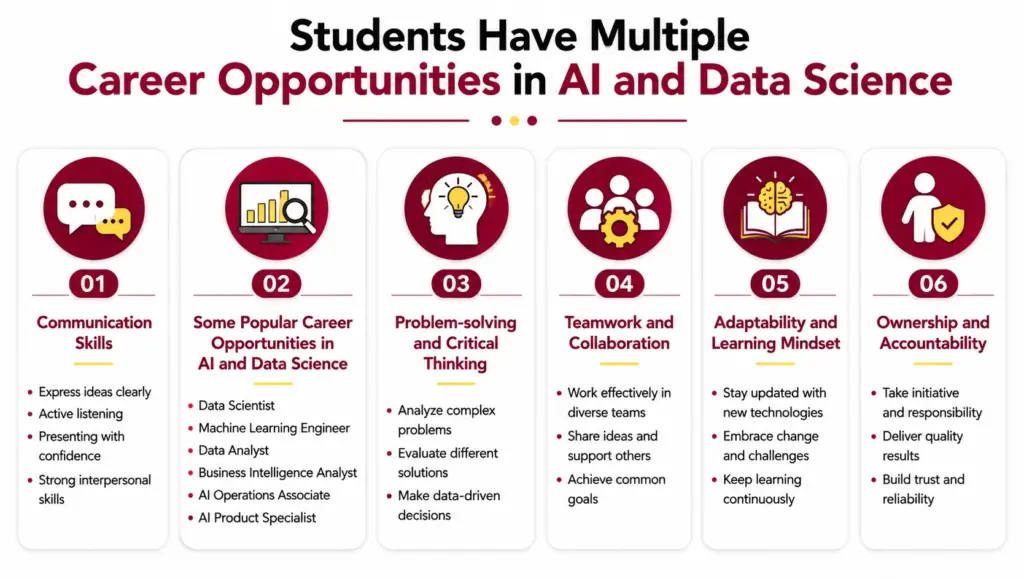
Students interested in AI and data science have multiple career opportunities because businesses across industries increasingly require professionals who can manage data-driven systems, AI-powered technologies, and automation workflows. As digital transformation continues expanding globally, companies now hire AI and data science professionals for a wide range of technical and analytical roles.
Some popular career opportunities in AI and data science include:
- Data Scientist
- Machine Learning Engineer
- Data Analyst
- Business Intelligence Analyst
- AI Operations Associate
- AI Product Specialist
These roles allow students to combine analytical thinking, technical expertise, problem-solving ability, and AI-assisted workflow understanding in future-focused industries.
Table 1: AI/Data Science Career Role vs Workplace Application vs Growth Potential
| Career Role | Workplace Application | Growth Potential |
| Data Scientist | Predictive analytics and business insights | High demand |
| Machine Learning Engineer | AI model development | Rapidly expanding |
| Data Analyst | Data interpretation and reporting | Strong growth |
| Business Intelligence Analyst | Business performance optimization | Increasing opportunities |
| AI Operations Associate | AI workflow management | Future-focused growth |
Another important advantage of AI and data science careers is flexibility. Professionals can work in:
- Technology companies
- Healthcare organizations
- Banking and finance sectors
- E-commerce businesses
- Consulting and analytics firms
AI and data science careers also support long-term career scalability because businesses continue expanding through automation systems, cloud technologies, and data-driven operations.
For students exploring evolving data science career paths, understanding future-focused AI and analytics opportunities can significantly improve career planning and industry readiness in 2026.
AI-Powered Workplaces Need Practical Skills Beyond Theory
AI-powered workplaces increasingly need practical skills beyond theory because businesses now expect professionals to apply AI and data science knowledge effectively in real-world business environments. While theoretical understanding helps build foundational knowledge, companies prioritize candidates who can solve practical problems, manage workflows, and contribute to productivity in technology-driven workplaces.
Modern businesses increasingly use:
- Automation workflows
- Machine learning systems
- Predictive analytics platforms
- AI-assisted productivity tools
- Cloud-based data operations
Professionals working in these environments must understand how to apply technical concepts practically during real-time business operations.
Another important factor is human + AI collaboration. Companies increasingly value professionals who can combine:
- Technical understanding
- Analytical reasoning
- Communication ability
- Problem-solving skills
- Workplace adaptability
This combination helps organizations optimize AI-powered systems while improving workflow efficiency and decision-making.
Practical projects, internships, and portfolio development also help students:
- Gain hands-on implementation experience
- Understand real-world workflows
- Improve analytical thinking
- Build workplace-ready expertise
- Develop confidence in AI-assisted environments
Businesses increasingly evaluate practical implementation ability because future workplaces continue evolving rapidly through digital transformation and automation technologies.
For students exploring future-focused career paths in data science, developing practical AI and data science skills can significantly improve employability and long-term career growth in technology-driven industries.
Communication and Problem-Solving Improve AI Career Growth
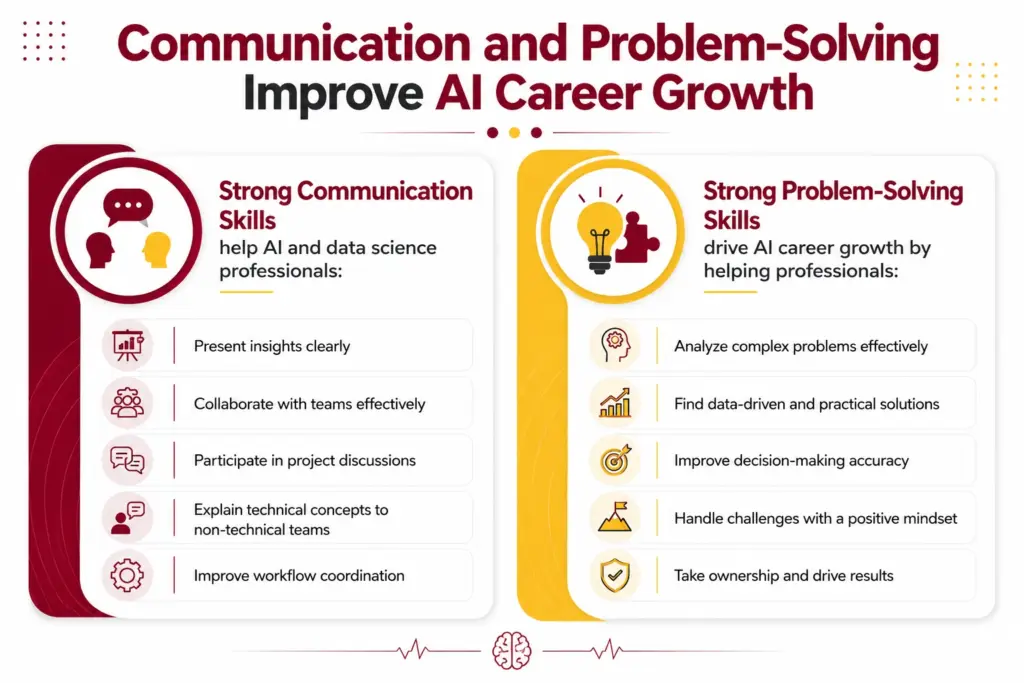
Communication and problem-solving are becoming highly important in AI and data science careers because modern workplaces increasingly depend on collaboration, analytical thinking, and data-driven decision-making alongside automation systems and AI-powered technologies. Companies now prefer professionals who can not only work with technical systems but also communicate insights clearly and solve practical business challenges effectively.
Strong communication skills help AI and data science professionals:
- Present insights clearly
- Collaborate with teams effectively
- Participate in project discussions
- Explain technical concepts to non-technical teams
- Improve workflow coordination
Problem-solving ability is equally important because professionals working in AI-powered industries often need to:
- Analyze large datasets
- Identify workflow challenges
- Improve operational efficiency
- Optimize business processes
- Make data-driven decisions
Professionals with strong analytical reasoning are often better at handling AI-assisted systems and supporting business productivity in modern digital workplaces
Which AI and Data Science Skills Should Students Learn in 2026?
Students preparing for AI and data science careers should focus on developing practical and industry-relevant skills aligned with future workplace demand.
Some important skills include:
- Data analytics basics
- Machine learning fundamentals
- AI tool familiarity
- Data visualization
- Problem-solving ability
- Portfolio development
Employers increasingly prefer candidates who combine technical understanding with communication ability, analytical thinking, and practical implementation skills. Students who continuously improve these skills are more likely to become industry-ready and successful in AI and data science careers.
Practical Projects and Portfolios Improve AI Career Opportunities
Practical projects and portfolios significantly improve AI career opportunities because companies increasingly evaluate candidates based on real-world implementation ability and measurable expertise instead of relying only on academic qualifications or theoretical learning. Businesses now prefer professionals who can demonstrate practical understanding of AI-powered systems, analytics workflows, and data-driven problem-solving.
Practical AI and data science projects help students:
- Improve technical confidence
- Understand AI-assisted workflows
- Develop analytical thinking
- Gain hands-on implementation experience
- Build industry-ready expertise
Internships and collaborative assignments are also valuable because they expose learners to:
- Real-time workflow management
- Team collaboration
- Data-driven operations
- AI-assisted productivity systems
- Workplace communication
Table 2: AI/Data Skill vs Workplace Benefit
| AI/Data Skill | Workplace Benefit |
| Data Analytics | Better business decision-making |
| Machine Learning Basics | AI workflow understanding |
| Data Visualization | Improved reporting and communication |
| Problem-Solving Ability | Faster workflow optimization |
Another major advantage of practical learning is portfolio development. Companies often evaluate:
- Real-time project implementations
- Internship experience
- Analytical reasoning ability
- Communication and teamwork
- Practical problem-solving skills
Students who combine practical projects with strong portfolios are often more competitive because they demonstrate both technical understanding and workplace-ready implementation ability.
For learners exploring future-focused career opportunities, practical AI and data science projects can significantly improve employability and long-term career growth in technology-driven industries.
Common Mistakes Students Make While Preparing for AI and Data Science Careers
Many students make avoidable mistakes while preparing for AI and data science careers because they focus mainly on theoretical learning without improving practical implementation ability and workplace-ready expertise. As companies increasingly prioritize skill-based hiring, relying only on academic knowledge can reduce employability in competitive technology industries.
Some common mistakes students make include:
- Depending only on theoretical learning
- Ignoring practical implementation
- Weak communication skills
- Lack of portfolio development
- Inconsistent upskilling
- Limited real-world project exposure
Another major issue is learning AI and data science concepts without understanding how they apply in real business environments. Modern companies increasingly expect professionals to:
- Analyze data effectively
- Solve practical workflow challenges
- Collaborate with teams
- Adapt to AI-powered systems
- Improve productivity through data-driven decision-making
Students also underestimate the importance of continuous learning. AI and data science industries continue evolving rapidly with automation technologies, analytics platforms, cloud systems, and machine learning tools. Professionals who regularly improve their technical and analytical skills are more likely to remain competitive in future job markets.
Portfolio development, internships, and project implementation are also areas many learners overlook while preparing for AI and data science careers.
For students preparing professional profiles and career applications, this resume builder can help improve career readiness and professional presentation for future AI and data science opportunities.
How Students Can Become Industry-Ready for AI and Data Science Careers
Students can become industry-ready for AI and data science careers by focusing on practical learning, continuous skill development, and understanding how AI-powered workplaces operate in real business environments. Since companies increasingly prioritize skill-based hiring, students need workplace-ready expertise and practical implementation ability to remain competitive in future-focused industries.
Some effective ways students can improve career readiness include:
- Participating in practical AI and data science projects
- Building portfolios and case studies
- Learning AI-assisted workflows
- Improving communication and collaboration
- Practicing analytical thinking regularly
- Gaining internship exposure
Continuous learning is especially important because AI and data science industries continue evolving rapidly with:
- Automation technologies
- Machine learning systems
- Data analytics platforms
- Cloud-based workflow tools
- AI-powered productivity systems
Another important factor is practical implementation. Employers increasingly evaluate:
- Real-time project experience
- AI and data workflow understanding
- Communication ability
- Workplace adaptability
- Problem-solving and analytical thinking
Students who actively participate in internships, collaborative assignments, portfolio development, and practical implementation activities are more likely to understand modern workplace expectations and improve employability in AI and data science careers.
Final Thoughts
AI and data science careers are growing rapidly as businesses continue expanding through automation systems, machine learning technologies, analytics platforms, and AI-powered digital operations. Companies across industries increasingly depend on data-driven decision-making and intelligent workflow systems, making AI and data science professionals highly valuable in modern workplaces.
In 2026, industries such as information technology, healthcare, banking, e-commerce, cybersecurity, and digital marketing are expected to continue creating strong opportunities for AI and data science professionals. Employers also increasingly prioritize candidates who combine technical understanding with practical implementation ability, analytical thinking, communication skills, and workplace adaptability.
For students preparing for future technology careers, continuous learning and practical exposure will play a major role in long-term employability and career growth. Participating in practical projects, building portfolios, improving analytical reasoning, understanding AI-assisted workflows, and adapting to evolving technologies can help learners become more industry-ready and competitive in AI and data science industries.
Build Future-Ready AI and Data Science Skills for Career Success
AI and data science industries are creating exciting career opportunities for students as businesses increasingly adopt automation systems, machine learning technologies, predictive analytics, and AI-powered digital operations. Companies now prefer candidates who can combine technical expertise with analytical thinking, communication ability, and practical implementation skills.
Preparing for AI and data science careers requires more than theoretical knowledge alone. Students need practical exposure, portfolio development, real-world workflow understanding, and continuous learning to remain competitive in technology-driven workplaces and future-focused industries.
To improve AI and data science career readiness in 2026, students should focus on:
- Practical project participation
- Portfolio and case study development
- Machine learning and analytics basics
- AI-assisted workflow understanding
- Communication and problem-solving skills
- Continuous upskilling and adaptability
If you want to build industry-ready AI and data science expertise with practical learning exposure and career-focused preparation, these career-focused courses can help support your journey toward long-term success in future-focused technology careers.
FAQ 1: What are the top career opportunities in AI and data science?
Some popular career opportunities include:
- Data Scientist
- Machine Learning Engineer
- Data Analyst
- Business Intelligence Analyst
- AI Operations Associate
- AI Product Specialist
These roles continue growing rapidly across industries.
FAQ 2: Why are AI and data science careers growing in 2026?
AI and data science careers are growing because businesses increasingly use automation systems, analytics platforms, machine learning technologies, and data-driven decision-making to improve productivity and business performance
FAQ 3: What skills are important for AI and data science careers?
Important skills include:
- Data analytics basics
- Machine learning fundamentals
- AI tool familiarity
- Data visualization
- Problem-solving ability
- Communication skills
These skills improve industry readiness.
FAQ 4: Which industries hire AI and data science professionals the most?
Industries hiring AI and data science professionals extensively include:
- Information technology
- Healthcare
- Banking and finance
- E-commerce
- Cybersecurity
- Digital marketing
These industries continue expanding through digital transformation.
FAQ 5: Why are practical projects important in AI and data science careers?
Practical projects help students gain hands-on implementation experience, improve analytical thinking, build portfolios, and understand real-world AI-assisted workflows.
FAQ 6: What role does communication play in AI careers?
Communication skills help professionals present insights clearly, collaborate effectively with teams, explain technical concepts, and improve workflow coordination in AI-powered workplaces.
FAQ 7: How does portfolio development improve employability?
Portfolios help students showcase practical expertise, real-time project experience, analytical thinking, and workplace-ready implementation ability to employers and recruiters.
FAQ 8: What common mistakes should students avoid while preparing for AI and data science careers?
Common mistakes include:
- Depending only on theoretical learning
- Ignoring practical implementation
- Weak communication skills
- Lack of portfolio development
- Inconsistent upskilling
Avoiding these mistakes can improve employability.
FAQ 9: How can students become industry-ready for AI and data science careers?
Students can become industry-ready by participating in practical projects, building portfolios, improving communication skills, learning AI-assisted workflows, and continuously improving technical and analytical skills.
FAQ 10: Why is continuous learning important in AI and data science careers?
Continuous learning is important because AI and data science industries evolve rapidly with new machine learning systems, analytics tools, automation technologies, and changing workplace expectations.
Leave a Reply